Something to read first
A truce for the sake of a footrace
Every four years, something peculiar happened in a green valley in the western Peloponnese. Messengers fanned out from a small sanctuary to every Greek city they could reach, carrying one instruction that overrode every treaty, feud and invasion plan on the books. For the length of the festival, nobody was to fight. Armies were to stay home, and travellers heading to the valley were to pass unharmed, even through the territory of their enemies. People who would not trade a loaf of bread on any other day gladly offered a bed to a stranger bound for the same place.
What waited at the end of the road was a long stretch of open ground beside a river, a grove of trees, and a temple that held the oddest object in Greece. It was a statue so large that visitors said it would have gone through the roof if the god it portrayed had stood up. The king of the gods sat on a throne of ivory and gold, a figure of a god who looked like a man, and the man who had made it was famous for having done the same with a goddess in a city many days to the east. People tried to say how it felt to stand in front of it, and mostly they gave up.
In the field itself, the competitors were not dressed for anything. The Greeks went about their sport the way they went about much else, with a candour that made visitors from other lands nervous. The runners, throwers and wrestlers stripped, oiled themselves and took their places in front of an audience of tens of thousands. There were races of different lengths, one of them short enough to be run on a single breath, another in which the runners carried a shield on their arm. There was a contest called the all-power, in which two men were allowed to do almost anything to each other short of biting and gouging. One famous champion from the south of Italy took six wreaths in a row and, so people said, carried a bull around the stadium on his shoulders.
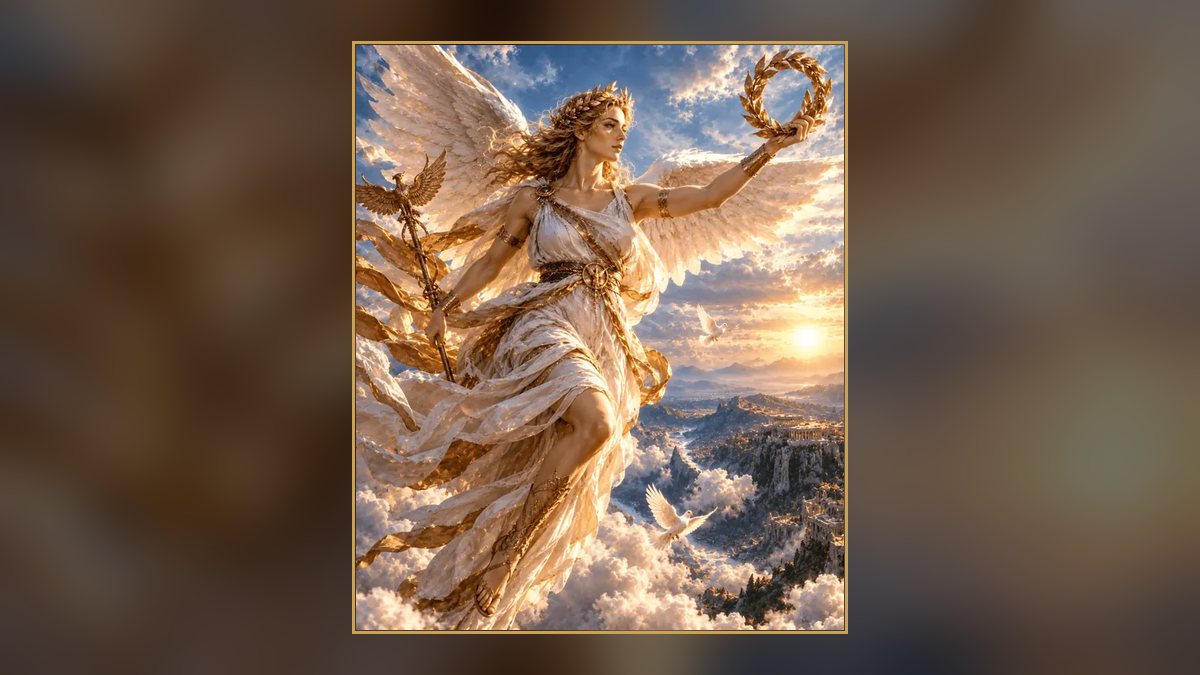
The prize, surprisingly, was a handful of leaves. The victor stood while a judge placed on his head a crown cut from a wild tree that grew in a sacred spot behind the temple. That was it. No coins, no cups, no contracts. But a winner could expect to return to his own city with a parade, a free meal for life and, in some places, a statue in the market. The Greeks understood that praise is worth more than money, and that a wreath, if you give it the right significance, can outweigh a purse.
The valley was the first of four great gatherings. Another took place beside a narrow stretch of land that joined the Peloponnese to the mainland, in honour of the god of the sea. A third was held in a quiet valley where, so the story went, a very large hero had once wrestled a lion with his bare hands, and the victors there were crowned with something humble that grew beside a ditch. The fourth, at the great shrine on the slopes of Parnassus, did not begin with sport at all. It began with music: a hymn to the god of that mountain, sung to a lyre, recalling how he had once dealt with a snake. The wrestling and the chariot races came later. At that gathering the victors were given a branch of a tree with a special place in the god's heart.
Not all the rites were public. Every year a procession set out from Athens along the Sacred Way to a small town on the coast, and the people who walked it had been preparing for months. They were being initiated into something so secret that to this day we cannot be sure what it was. We know that it involved a goddess who had lost a daughter, that it ended with a vision, and that those who experienced it came out believing that death was not the end. We also know that nobody who took part ever described it, and the Greeks, who talked about everything, kept that silence for well over a thousand years.
Women had festivals too, and some of them were barred to men entirely. In one of these, matrons carried baskets and ancient symbols to a hilltop shrine and spent days away from home in the company of other women, while their husbands were left to look after the house. Elsewhere, young girls wove a great robe for a goddess, month after month, and when it was finished it was carried up to the Acropolis in a procession with a basket-bearer at its head.
Underneath all of this ran the daily business of religion. A Greek poured a little wine on the ground before drinking. He set aside the best bones, wrapped in fat, to burn for the gods and kept the meat for himself, a bargain that the gods, according to a story from the beginning of time, had once been tricked into accepting. He began and ended every feast with an offering to the quiet goddess of the fire in the middle of the house. And if he wanted to know what the future held, he looked up at the sky and waited for a bird to fly past.
Put it all together and you get something more like a calendar than a creed. The Greeks did not so much believe in their gods as keep company with them, feasting, racing and sometimes weeping alongside them. Their religion was a long series of occasions, and the thing it taught was how to be present at them.