Something to read first
The city that kept its own bad news
Most cities in the old stories begin with a hero or a god. This one began with a man who had stopped looking for his sister and started looking for a place to sit down. He had been sent out from the coast of Phoenicia with the instruction not to come home without her, and after years of searching, a priestess told him to give up and follow an animal instead. He went where it led. It lay down in the middle of a plain, and he decided that this was as good a place as any.
The trouble was that someone else already lived there. A spring in the plain was guarded by something large and scaled that belonged to the god of war, and the settlers who went for water did not come back. The newcomer killed it, which was probably unavoidable, and then did the thing he would be remembered for. On a goddess's advice he took the teeth, planted them in the earth like seed, and stood back. What came up was an army. Men rose out of the furrow with their weapons already in their hands, looked at one another, and began to fight. By the time it was over, five were left, and those five became the ancestors of the families who would run the city for centuries.
It is a startling way to found a place, and the Greeks knew it. They said Thebes was a city born with violence in its soil, and that it never quite shook it off. Even the wedding of its founder, which the gods attended, carried a gift that turned out to be a curse. A necklace made in a forge for a bride with a complicated family passed down through the generations like an infection, and everyone who held it came to a bad end.
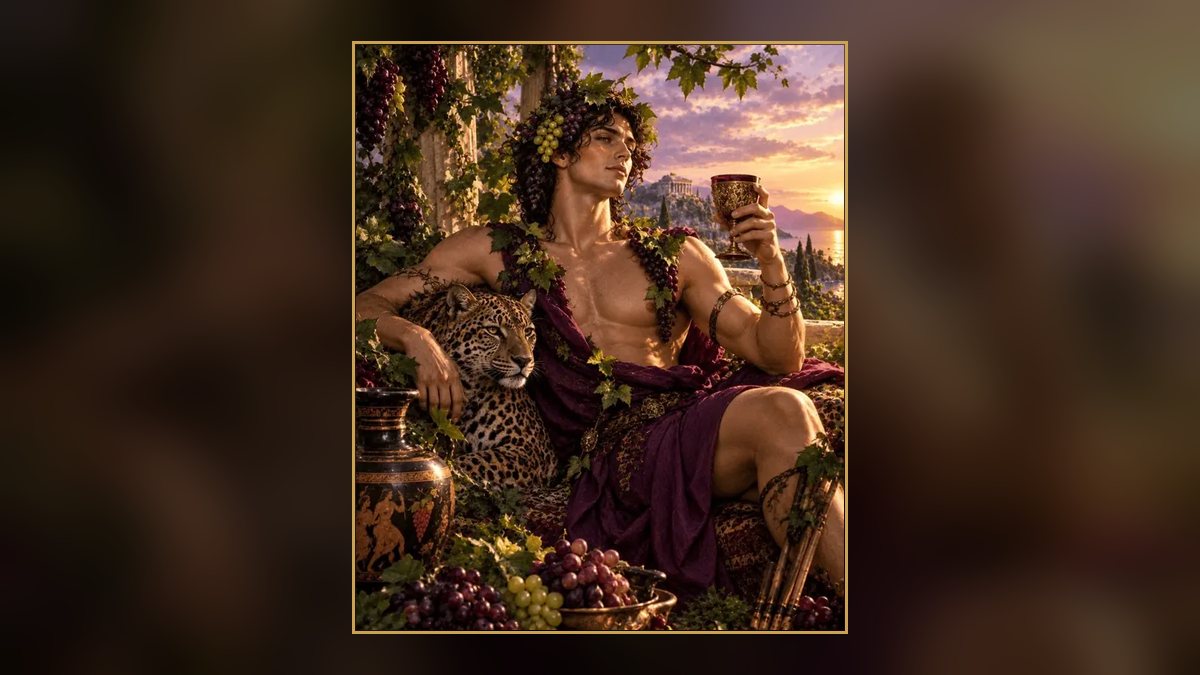
Then there was the matter of the princess who asked a god for too much. She was loved by the king of the gods, who came to her in disguise, and she was talked by a jealous goddess into demanding to see him as he really was. He gave in. The sight was more than any mortal body could take, and she died in a flash of light. Her unborn child survived, was sewn into his father's leg to finish growing, and came out a god. Years later he returned to the city that had denied his mother, and the family that had mocked him found out what a god does with a grudge. A king, so sure of his reason that he climbed a tree to spy on a festival, was torn limb from limb on the mountain by the women of his own household, led by his own mother, who thought she was carrying home the head of a lion.
The next generation of the family was not luckier. A baby was handed over to be left on that same mountain because a prophecy said he would kill his father. A shepherd took pity and gave him away. A foreign king raised him as a son. Grown, and told by an oracle that he was fated to do something terrible, he left the only home he knew and walked straight into the story he was running from. At a place where three roads meet, he quarrelled with an old man in a chariot and killed him. At the gates of the city, he met a creature that asked a riddle and killed those who could not answer, and he answered it. The city made him king and gave him the widow of the man he had just killed.
For years, nobody noticed. Then a plague arrived, and the new king, a good man with a terrible talent for finding things out, set about discovering its cause. His investigation led, step by step, to himself. When the truth came out, his wife was dead by her own hand, and he took the pins from her dress and put out his own eyes. The man who had solved the great riddle had never been able to answer the smaller one, about who he was.
You might think that would be the end of it. It was not. His sons quarrelled over the throne and killed each other at the city's gates, an army of seven champions led by a king from the south came to settle the matter, and the city closed its gates and fought them off. His daughter, who had led him through the countryside as he wandered blind, defied the new ruler's order and buried a brother who had been declared a traitor, and paid for it with her life. Her uncle's grief at the end of the play is one of the great studies of a man who is right about everything except what matters.
Thebes was later destroyed by a young conqueror from the north, who left only the house of a poet standing. By then the city had been told so many bad stories about itself that it hardly needed anyone else to finish the job. Perhaps that was the point. The Greeks used Thebes as the place where they set the stories they could not set in Athens: tales about what happens when a family cannot say its own secrets aloud, and about what a city does with a king who finds out too much.