Olympus is a real mountain. It stands in the north of Greece where Thessaly meets Macedonia, and its highest point, Mytikas, comes in a little under three thousand metres. Shepherds on the plain below could see it on most days. That matters, because every story about the gods' home starts from a plain fact: the people telling it could look up and point.
Nobody who wrote it down climbed to the top for a very long time. The first recorded ascent of Mytikas was in 1913. For the ancient Greeks the summit was where you stopped. Cloud sat on it, and what happened above the cloud was not your business.
A place that ignores the weather
Homer describes it in the Odyssey, when Athena leaves Odysseus and heads home. The seat of the gods, he says, is never shaken by wind, never soaked by rain, never touched by snow. Cloudless air spreads around it and a white brightness lies over everything, and the gods spend their days there in good spirits.
Now picture the real mountain in January. It is a place of storms and deep snow. Homer is describing exactly what the mountain is not, and I don't think that is an accident. My reading is that the peak you can see is only the doorway. The poets let the real mountain be the entrance and kept the actual house somewhere no weather reaches.
Houses, doors and a gatekeeper
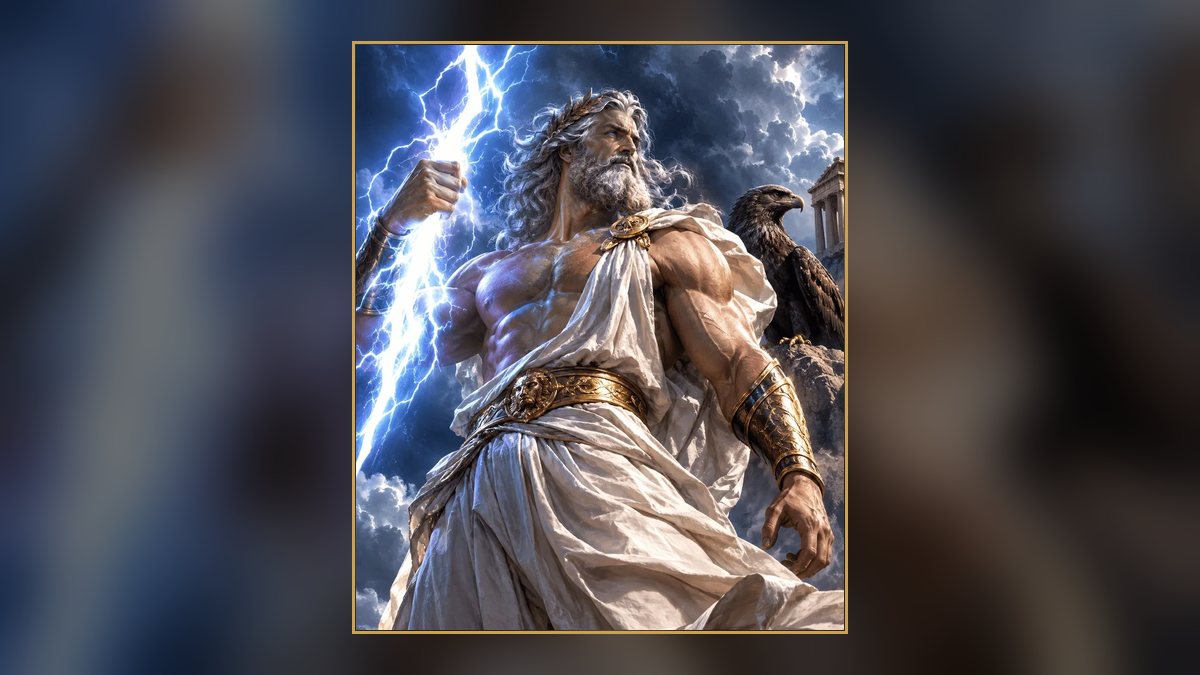
The Iliad gives the place something close to a floor plan. Every god has a house, and Hephaestus built them all, since nobody else could do the work. Zeus sits highest, on the top ridge of the many-folded mountain. The gates are not a wall at all. They are a bank of cloud, and the Hours, the goddesses of the seasons, are in charge of opening and closing it.
When Hera drives her chariot up in a hurry in book five, the Hours swing the cloud aside to let her through. It is a tiny detail and I have always liked it. The front door of the gods is staffed by the seasons.
Inside, they eat and drink. Nectar and ambrosia are their food, and a mortal who tastes them risks becoming something else. Hebe pours, or in other tellings Ganymede, the Trojan boy Zeus carried off to be his cupbearer. Apollo plays the lyre and the Muses answer in song.
It sounds peaceful, until Hera opens her mouth and the evening turns into an argument over which side to take at Troy. Hephaestus, the lame craftsman, tries to calm his mother by playing waiter and pouring for everyone, and the gods laugh at the way he limps around the hall. That is how the scene ends, with laughter. Olympus is not solemn. It is a household, and a loud one.
Who counts as an Olympian
The usual count is twelve, though the list shifts depending on who you ask. Zeus, Hera, Poseidon, Demeter, Athena, Apollo, Artemis, Ares, Aphrodite, Hephaestus and Hermes make eleven. The twelfth seat goes to Hestia in some lists and to Dionysus in others. One late tradition says Hestia gave hers up to him of her own accord and went back to tending the hearth.
Hades is the one who is always left out. He is Zeus's brother and he has a whole realm, but he does not eat at the table. He is busy somewhere else, and you can follow him down to the Underworld page.
How the gods got the mountain
Olympus was not always theirs. In the war against the Titans, the older generation held Mount Othrys to the south and the younger gods held Olympus. Hesiod says the fighting went on for ten years, with the sea boiling and the forests burning. When the Titans lost, the winners kept the heights, and the losers were sent down to Tartarus.
So the mountain is a trophy. Zeus rules from it because his side won it, and a good share of the later stories are people and monsters trying to take it from him.
The people who tried to climb
Two enormous brothers, Otus and Ephialtes, known as the Aloadae, decided to storm the mountain by stacking Mount Ossa on Olympus and Pelion on top of that. They meant to build a staircase out of other mountains. In Homer, Apollo kills them before they are fully grown. In other versions Artemis tricks them into spearing each other while they chase a deer she has sent between them. Either way it ends badly.
The Gigantomachy is the same idea at full scale. The Giants, Gaia's children, attacked the gods directly, and a prophecy said the gods could not finish them without a mortal's help. So Heracles was called up to fight on the mountain's side. The upper floor of the universe needed someone from the lower one to hold it.
Bellerophon tried it alone, riding Pegasus toward the sky. Zeus stopped him, and the rider came down hard. In the Iliad he spends what is left of his life wandering by himself, hated by the gods. Nobody gets up there on their own terms.
Mortals at the table
A few humans were invited. Tantalus dined with the gods, then either stole their food or served them his own son to test them, depending on who is telling it, and he ended up in Tartarus. Ixion was given a seat and tried to seduce Hera. Zeus shaped a cloud into her likeness, Ixion embraced the cloud, and he was fastened to a burning wheel. The lesson is not subtle. The invitation is a test, and what it tests is what you do with the invitation.
Thrown out of heaven
The mountain can also throw you out. Hephaestus tells it himself in the Iliad: Zeus once hurled him from the threshold for trying to defend Hera, and he fell the whole day, landing on Lemnos at sunset, where the Sintians looked after him. In another version it is Hera who throws him, ashamed of a baby with a twisted foot. Whichever you pick, he is the god who knows both what it is to be inside and what it is to be put out.
What happens up there, and what doesn't
Notice how seldom anyone is actually on the mountain when something important happens. Zeus watches the Trojan war from Mount Ida. Athena is on the field. Apollo is at Delphi. Poseidon sits in the sea. Olympus is where the gods go to be gods together, which means it is mostly where they eat, argue and make plans.
The deeds happen at ground level. That is why I think of Olympus as a council room more than a throne room. Who sits where, who has to stand, and who gets sent away from the table drives most of the myths you will read on this site.
Nearby in the myths